Neodymium
Neodymium (Nd), element 60, is a lanthanide rare earth driving the strongest permanent magnets (NdFeB) critical for EV traction motors, wind turbines, and the clean energy transition.
Last reviewed: 2026-02-24
Neodymium (symbol Nd, atomic number 60) is a lanthanide ('rare earth element') with standard atomic weight 144.242(3) (IUPAC). The dominant industrial use is as a key constituent of Nd–Fe–B (NdFeB) permanent magnets—described as the strongest commercially available permanent magnets in a U.S. government supply-chain assessment.
Choose your reading path
▸Executive Brief
1 min read
Executive Brief
- ▪Neodymium (symbol Nd, atomic number 60) is a lanthanide ('rare earth element') with standard atomic weight 144.242(3) (IUPAC).
- ▪The dominant industrial use is as a key constituent of Nd–Fe–B (NdFeB) permanent magnets—described as the strongest commercially available permanent magnets in a U.S. government supply-chain assessment.
- ▪NdFeB magnets are critical intermediates for electric traction motors (EVs/hybrids) and direct-drive wind-turbine generators, enabling compact and efficient motor/generator designs.
- ▪China accounted for 58% of global rare-earth mining (2020) and 92% of global NdFeB magnet production (2020), per a U.S. DOE supply-chain assessment.
- ▪Separation/refining remained ~90% China-concentrated in 2019 (OECD/IEA data); only four separation plants outside China were identified at that time (Malaysia, France, India, Estonia).
- ▪EU Regulation (EU) 2024/1252 (CRMA) lists 'rare earth elements for permanent magnets (Nd, Pr, Tb, Dy, Gd, Sm, Ce)' as strategic raw materials.
- ▪Up to 2011, less than 1% of rare earth elements were recycled globally (Binnemans et al., 2013).
- ▪China issued export controls on rare-earth items in April 2025 (Announcement No. 18), with some expanded measures later suspended until November 2026.
- ▪The critical chokepoint is not neodymium ore in isolation but the midstream-to-downstream chain (separation → metal/alloy → magnet manufacture), where concentration increases furthest downstream.
- ▪EU CRMA implementation milestones—delegated acts and disclosure obligations for magnet recycled content—will determine reporting requirements and data availability for secondary neodymium.
- ▪US DFARS procurement rules for covered magnets (with a scope expansion from 2027) are a predictable driver of qualification and documentation requirements in defence supply chains.
▸What is Neodymium (Nd)?
2 min read
What is Neodymium (Nd)?
Neodymium (Nd) is the chemical element with atomic number 60. It belongs to the lanthanide series, collectively known as 'rare earth elements'.
For industrial purposes, neodymium is typically handled as chemical forms (oxides, chlorides/fluorides) and alloys rather than as free metal. Extraction from rare-earth-bearing minerals (bastnäsite, monazite, xenotime, ion-adsorption clays) involves beneficiation, chemical cracking, and multi-stage separation via solvent extraction or ion exchange.
The material's strategic importance derives almost entirely from one application: Nd–Fe–B (NdFeB) permanent magnets. These are the strongest commercially available permanent magnets and are indispensable in electric vehicle traction motors, direct-drive wind turbines, and consumer/industrial electronics.
Primary neodymium is produced from mined rare-earth sources; secondary (recycled) neodymium is recovered from post-consumer waste—primarily end-of-life magnets. EU law explicitly requires disclosure of neodymium recycled content in permanent magnets in certain products.
Selected Properties
Neodymium (Nd): Permanent Magnetism
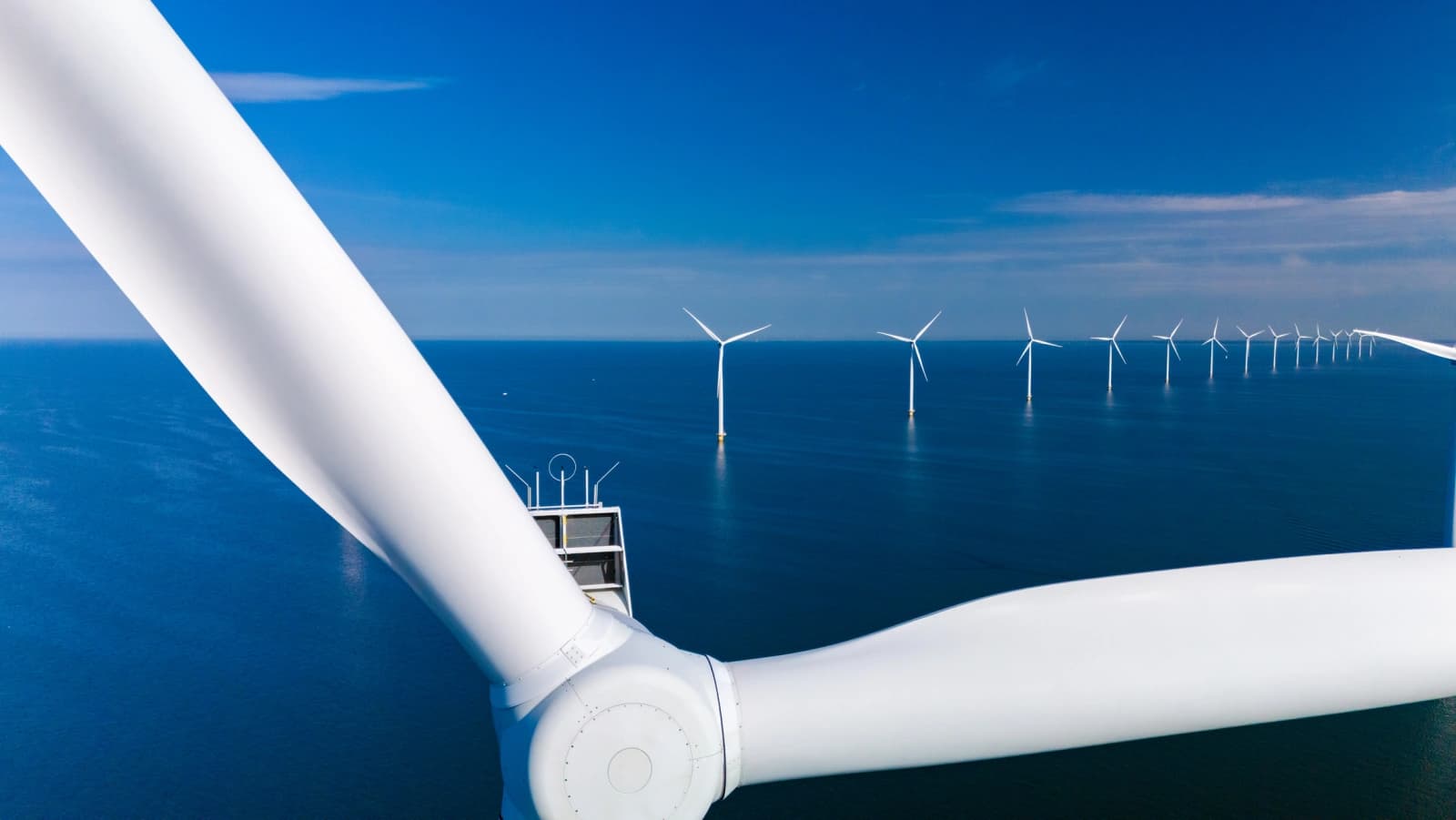
Neodymium was separated in 1885 by Austrian chemist Carl Auer von Welsbach from its 'twin', praseodymium. The two elements had been confused together and named didymium, which is why neodymium—'new twin' (neos didymos)—got its name. Its first uses were to tint glass and ceramics delicate colors. Its true revolution came in the 20th century: alloyed with iron and boron, neodymium creates the most powerful permanent magnets in the world (Nd). These magnets are the beating heart of the energy transition, indispensable to electric vehicle motors, direct‑drive wind turbines and the micromotors in our electronic devices.
▸Where Neodymium is Used
2 min read
Where Neodymium is Used
- ▪NdFeB magnets power electric traction motors in EVs and hybrids—the largest and fastest-growing demand driver.
- ▪High magnetic energy density enables compact, lightweight motors without sacrificing torque or efficiency.
- ▪Direct-drive wind turbine generators use NdFeB magnets to eliminate the gearbox, improving reliability and reducing maintenance.
- ▪Offshore wind expansion is a key driver of long-run neodymium demand growth.
- ▪NdFeB magnets in hard drives, speakers, headphones, microphones, and small motors across consumer and industrial electronics.
- ▪Miniaturisation advantage: high magnet strength enables smaller, lighter components at equivalent performance.
- ▪Neodymium-doped laser media (Nd:YAG, Nd-glass) are used in industrial cutting, medical procedures, and scientific research.
- ▪Nd³⁺ provides laser-active transitions at ~1064 nm in Nd:YAG—a widely used solid-state laser wavelength.
- ▪Neodymium compounds produce purple/violet hues in specialty glasses (didymium glass for glassblowing filters; optical filters).
- ▪Neodymium oxide and nitrate are used as catalysts in certain polymerisation reactions (scope and industrial scale vary).
▸Neodymium Supply Chain
3 min read
Neodymium Supply Chain

- ▪Neodymium is extracted from rare-earth-bearing minerals: bastnäsite, monazite, xenotime, loparite, and ion-adsorption clays.
- ▪In the U.S., bastnäsite is mined at Mountain Pass (California); monazite is produced from heavy-mineral sands (USGS).
- ▪Secondary feedstocks include end-of-life magnets and manufacturing scrap.
- ▪Ore is processed into a mixed rare-earth concentrate. Some deposits (e.g., monazite) contain thorium and uranium, requiring radioactive-element removal.
- ▪Chemical 'cracking' of concentrate involves high-temperature concentrated acids to liberate rare earths.
- ▪Individual rare earths are isolated by multi-stage solvent extraction or ion exchange, producing separated oxides (e.g., Nd oxide) and refined metals.
- ▪China held ~90% of global separation/refining capacity in 2019. Only four plants operating outside China at that time: Malaysia, France, India, Estonia.
- ▪Nd oxide or metal is alloyed with iron and boron (plus small additions of Dy/Tb for high-temperature grades) to produce NdFeB alloy powder.
- ▪Sintered or bonded magnets are manufactured from this powder; China produces 92% of global output (2020, DOE).
- ▪NdFeB magnets are integrated into rotors/stators of EV motors, direct-drive wind generators, and a wide range of electronic devices.
- ▪Other Nd products (oxides, metals, glass dopants) go into lasers, specialty glass, and catalysts.
- ▪Multi-stage chemical separation is complex, hazardous, and historically concentrated in a small number of hubs.
- ▪Co-production of rare earths from shared ore bodies means individual element supply depends on overall rare-earth mining dynamics.
- ▪Radioactive by-product handling (thorium/uranium in monazite) adds permitting complexity and waste-management costs.
- ▪Geographic concentration intensifies downstream: mining (58% China) → separation (~90%) → magnets (92%).
- ▪Primary neodymium: produced from mined rare-earth sources (ore → concentrate → separation/refining → Nd oxide/metal/alloy). Industrial statistics reference 'neodymium oxide (99.5% minimum)' as a standard market specification (USGS).
- ▪Secondary neodymium: recovered from post-consumer waste, primarily end-of-life permanent magnets. EU Regulation (EU) 2024/1252 uses this concept explicitly and mandates disclosure of recycled content in permanent magnets in covered products.
- ▪'Nines' notation: 4N = 99.99% purity (~100 ppm impurities); 5N = 99.999% (~10 ppm). Relevant for high-purity Nd used in optical media and certain electronics (Ames Laboratory definition).
- ▪TREM/TREO-basis purity: rare-earth purities can be reported on a Total Rare Earth Metal basis, which does not specify absolute purity vs all elements—oxygen and other impurities can be material (Ames Laboratory caution).
- ▪Magnet-grade Nd feedstock: typically tracked with explicit minimum purity descriptors (e.g., 99.5% minimum oxide) rather than nines notation; performance depends on composition control, not just headline purity.
- ▪End-users may qualify magnets based on the technology used to produce them; alternative production routes can trigger costly and time-consuming requalification (noted in U.S. Section 232 investigation record).
- ▪DOE supply-chain assessment states substitution is 'difficult throughout the supply chain due to the unique characteristics and technical advantages of rare-earth magnets.'
- ▪Alternative motor topologies (induction motors, switched-reluctance) can reduce Nd content but typically trade performance, efficiency, or system design constraints.
▸Key Policy Events
2 min read
Key Policy Events
Factual timeline of regulatory and policy developments
U.S. Executive Order 14017 prompts DOE to conduct a supply-chain deep-dive assessment on NdFeB permanent magnets, framing neodymium as a strategic concern.
U.S. Department of Commerce initiates a Section 232 national security investigation into the effect of NdFeB magnet imports, documenting supply concentration and qualification constraints.
DoD finalises rules restricting procurement of NdFeB magnets from specified 'covered nations'; DFARS clause 252.225-7052 defines a two-phase scope: through 2026-12-31 (melted/produced), expanding from 2027-01-01 to 'mined, refined, separated, melted, or produced'.
EU Critical Raw Materials Act designates rare earth elements for permanent magnets (Nd, Pr, Tb, Dy, Gd, Sm, Ce) as strategic raw materials; establishes a framework for recycled-content disclosure and potential minimum recycled-content requirements.
MOFCOM/GAC add export controls on specified rare-earth metals, oxides, compounds, permanent magnet materials (incl. NdFeB magnets containing Dy/Tb), and rare-earth targets.
Introduces export-control requirements for rare-earth items produced outside China if they incorporate China-origin controlled inputs above a 0.1% value ratio; includes scrutiny for advanced semiconductor end-uses (≤14 nm logic, ≥256-layer memory).
Suspends implementation of multiple 2025 announcements (including Announcements 57 and 61/62) until 10 November 2026; April 2025 controls (Announcement 18) remain referenced as in effect.
European Commission deadline to adopt a delegated act establishing rules for calculation/verification of neodymium (and other listed elements) recovered from post-consumer waste in permanent magnets.
Covered products with permanent magnets above 0.2 kg total weight must publicly disclose the share of neodymium recovered from post-consumer waste. Reporting must be made available on a free-access website.
By this date at the latest, the Commission may adopt delegated acts establishing minimum shares of listed rare earths (including neodymium) recovered from post-consumer waste in permanent magnets.
▸Reference Data
Deep dive
Reference Data
Full indicator tables, methodology notes, and sources
▸What is neodymium and why is it called a 'rare earth'?
▸What is the single most important industrial use of neodymium?
▸Why are magnets a supply-chain chokepoint rather than the ore?
▸What does '4N' or '5N' purity mean for neodymium?
▸What is 'secondary neodymium'?
▸Are rare earths recycled at scale today?
▸How does regulation treat neodymium in permanent magnets?
▸Can neodymium in EV motors be substituted?
Need a Neodymium briefing?
We support procurement, compliance, and strategy teams with fact-based market intelligence. Not investment advice.